
Loading...
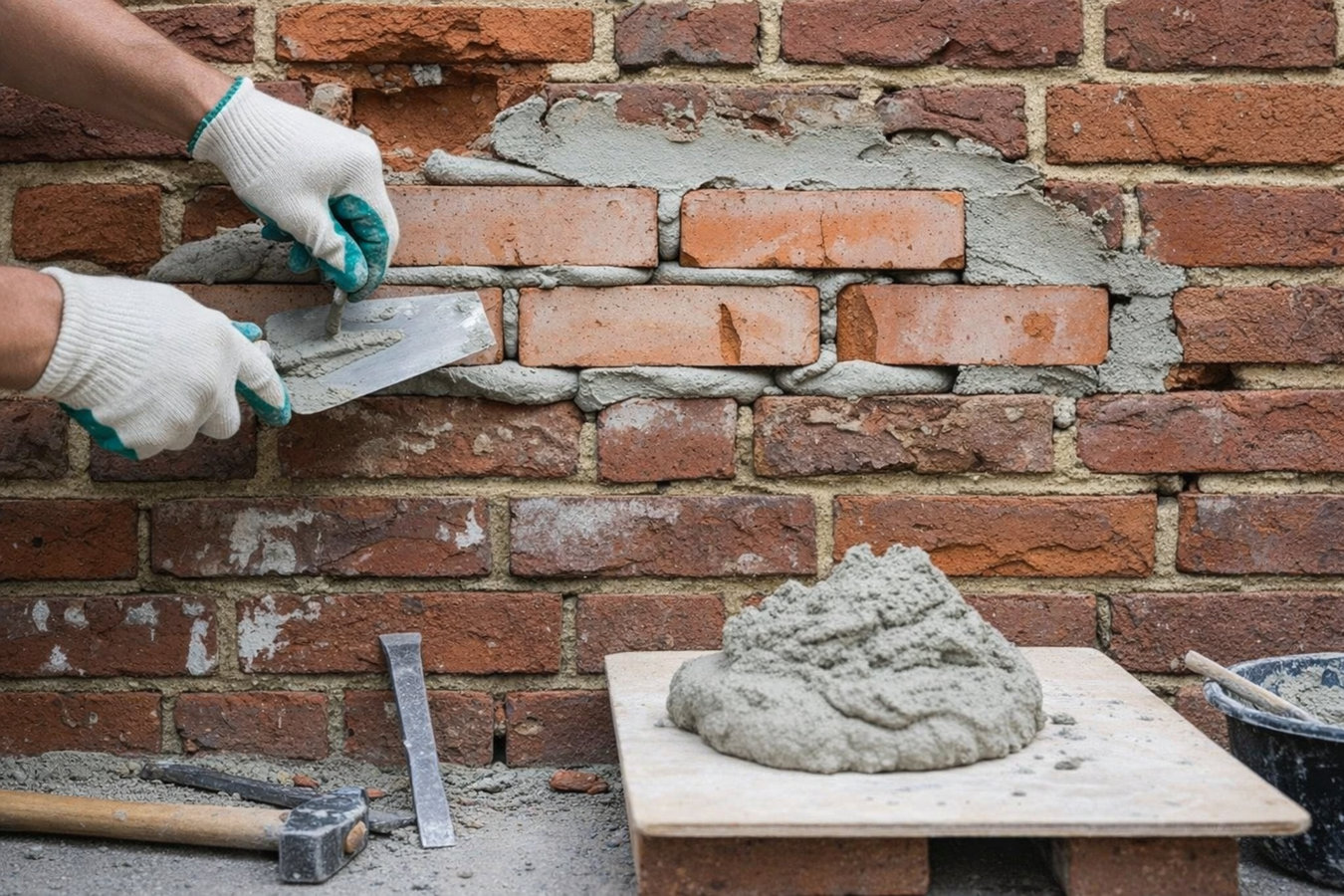
Cracked bricks and failing mortar let water into your walls with every summer storm. We assess the damage, replace broken masonry units, and repoint joints so your exterior holds up to South Florida's rain, heat, and salt air.
Brick repair in Hialeah covers a range of fixes, from replacing cracked or spalled individual bricks to repointing mortar joints across a wider wall section. A mason first determines whether the problem is in the brick itself, the mortar holding it, or the structure behind it, because each calls for a different approach. Most focused patch jobs - fixing a few damaged joints or swapping out two or three bricks - are completed in one to two days on-site. Larger repairs, such as rebuilding a section of wall or addressing widespread deterioration, may take three to five days.
Hialeah's older housing stock is dominated by CBS (concrete block structure) homes built between the 1950s and the 1980s. Many of these exteriors include brick veneer or decorative brick facing that has now had decades to weather in South Florida's heat, humidity, and salt air. Once water starts moving through cracks in that veneer, it works behind the wall and can cause mortar to dissolve from the inside out. Catching damage early - before a pattern of small cracks becomes water intrusion - is almost always less expensive than a structural repair. When mortar is the primary culprit rather than the bricks themselves, our tuckpointing service handles the joint-by-joint repointing work.
Run your finger along the joints between bricks. If the mortar feels soft, sandy, or crumbles away easily, it is no longer keeping water out. In Hialeah's humid climate this breakdown happens gradually and is easy to miss until it is widespread - worth checking at least once a year, especially after hurricane season ends.
Those white streaks or powdery patches on brick surfaces are caused by water moving through the wall and leaving mineral deposits as it evaporates. This is a clear sign that moisture is already entering your masonry somewhere. In South Florida's rainy season, that water has plenty of chances to cause interior damage if the entry point is not sealed.
When the surface of a brick starts to flake off in layers or chunks break away, the brick itself has been weakened - often by years of moisture cycling in and out of the material. This is more common on older Hialeah homes with brick veneer exposed to decades of heat, humidity, and salt air. A flaking brick will not recover on its own.
New cracks in brick or mortar that appear after a heavy rain or named storm deserve attention. Hialeah homes take on significant wind and water pressure during hurricane season. Cracks that run diagonally from the corners of windows or doors are especially worth investigating - those patterns can point to movement in the wall or the structure behind it.
Our brick repair work begins with a thorough on-site assessment - checking the condition of individual bricks and mortar joints, testing hardness, and looking for signs of water damage or structural movement behind the surface. For bricks that need to be replaced, we source the closest available match in color, size, and texture before starting so you know exactly what the finished result will look like. Color matching is harder on older Hialeah homes where the original bricks are no longer manufactured, and we are upfront with you about that before any work begins. When mortar joints are the main issue alongside damaged bricks, we pair the replacement work with tuckpointing to handle both problems in a single mobilization.
For brick surfaces that extend to driveways, walkways, or outdoor paved areas showing wear and cracking, we connect the repair to longer-term surface planning. Our driveway pavers service is a natural next step when a repaired brick driveway is near the end of its functional life and a more durable paver surface makes more sense than continued patching. We help you understand both options so you can decide based on the full picture, not just what is immediately visible.
Right for walls where specific bricks are cracked, spalled, or hollow-sounding while surrounding units are still sound.
Best when the bricks are intact but the joints between them have softened, cracked, or receded below the surface.
Needed when a run of bricks and mortar has deteriorated to the point where spot repairs would not hold - common after storm damage.
For walls showing efflorescence, interior damp patches, or staining that points to water intrusion through the masonry layer.
Hialeah is only a few miles inland from Biscayne Bay and the Atlantic coast, and salt-laden air moves through the area regularly - especially during onshore wind events. Salt is corrosive to both mortar and the metal ties that anchor brick veneers to the wall behind them. Homeowners on the eastern side of the city often find that their brick surfaces deteriorate faster than the age of the building would suggest, and salt exposure is a significant reason why. Miami-Dade County enforces some of the strictest building standards in the country, put in place after Hurricane Andrew in 1992. For repairs involving structural walls or significant exterior sections, that means permits and inspections are part of the process. We know the threshold and handle the paperwork so your job stays on the right side of the county's requirements.
We serve homeowners throughout Hialeah and the wider South Florida region. Homeowners in Miami and Miami Beach encounter the same coastal salt air conditions, and we bring the same material selection and permitting knowledge to those jobs. The bulk of the homes we work on across this region are CBS construction from the 1950s through the 1980s - the same era of housing stock that lines most of Hialeah's streets. That means our team arrives already knowing the mortar mix generations typical for homes of your age, the brick veneer attachment methods used in that era, and which repairs have a real chance of lasting in this climate.
We respond within 1 business day. Describe what you are seeing - crumbling joints, cracked bricks, staining, or whatever caught your attention. We will ask a few quick questions and schedule an in-person visit, because a reliable price depends on what we find on-site.
We walk the area with you, look closely at the bricks and mortar, and check for any signs of water damage or structural movement behind the surface. We may tap bricks to check for hollow spots or probe joints to test how far the deterioration goes. This visit is completely free.
You receive a clear written estimate - what work will be done, the timeline, and the cost, including permit fees if required by Miami-Dade County. No surprise line items after the job starts. Compare estimates if you like; we encourage it.
The crew removes damaged mortar and bricks, cleans the area, and applies new material matched to your existing wall. Fresh mortar needs 24 to 48 hours before it gets wet. We walk the finished repair with you before leaving and explain what to avoid - like pressure washing - during the curing window.
We respond within 1 business day. There is no obligation to hire after the estimate. We give you a clear picture of what needs doing and what it costs - the decision is entirely yours. After submitting, someone from our office will call to schedule a free on-site visit.
(772) 264-9670We hold a Florida state masonry contractor license and are registered with Miami-Dade County, which is required before permits can be pulled for structural brick work. An unlicensed contractor who skips the permit process can leave you with a repair that creates problems at your next home sale or insurance claim.
We work across Hialeah and 11 surrounding communities, from Miami Beach to Homestead. That regional footprint means we have handled the full range of CBS construction common to this era and climate. The Mason Contractors Association of America provides additional guidance on industry best practices at masoncontractors.org.
Homes built in the 1950s and 1960s often used softer mortar mixes than what is standard today. Replacing old mortar with a mix that is too hard can crack the original bricks over time as the wall expands and contracts. We test the existing mortar before selecting a replacement mix - a detail most homeowners never think to ask about but that separates a 20-year repair from a 2-year one.
February through April is the optimal window for brick repair in Hialeah. Repairs done before the rainy season arrive mean fresh mortar cures fully before summer storms test it. Booking early also means you are not competing with post-storm demand when every contractor in South Florida is fielding calls at the same time.
Those four factors - licensing, regional experience, material selection, and timing - are what determine whether a brick repair in Hialeah holds up through years of heat, humidity, and storm seasons or starts failing again before you would expect. We bring all of them to every job we take on in this community.
Verify any contractor's Florida license at the Florida DBPR license lookup. For information on historic brick materials and repair standards, see the National Park Service Preservation Briefs.
If your brick or concrete driveway needs more than a repair, we install durable paver systems built to handle Hialeah's heat and heavy seasonal rain.
Learn moreWhen mortar joints are the primary issue - not the bricks themselves - tuckpointing removes old material and repacks every joint for a watertight finish.
Learn moreHialeah's rainy season begins in May - reach out now to lock in your repair date while our calendar is open and before post-storm demand fills every contractor's schedule.